Breezely: An IoT Solution for Monitoring Window and Door States
Breezely is an IoT device that monitors the open and closed status of windows and doors. It provides real-time data for better home security and energy efficiency.
My Role
I was the team lead and mobile developer on Breezely. Alongside coordinating the team, I built the cross-platform mobile app and drove the integration between the app, the IoT hardware, and the backend.
Technical Challenges
A few parts of this project were genuinely hard to get right:
- Local connection to the IoT device — establishing a reliable direct link between the mobile app and the sensor hardware.
- Standing up and integrating the backend — setting up the Django backend and the IoT service, then wiring them together into one working system.
- Authentication with Zitadel — getting Zitadel to work across the app, backend, and IoT service for a single, consistent login.
Introduction
Whether for temperature control or burglary prevention, closed windows and doors matter. Breezely monitors these states in real time.
What is Breezely?
Breezely was built by a student development team with the goal of monitoring windows and doors simply. Compact, non-invasive sensors capture their state along with temperature and humidity. The data is shown in a mobile app.
Key Features:
- Real-time monitoring of window and door statuses
- Temperature and humidity tracking
- Non-invasive, easy-to-install sensors
- Mobile app notifications
- Historical data analysis
- Multi-user access control
Breezely IoT Ecosystem
Breezely's components work together to enable a secure and energy-efficient home.
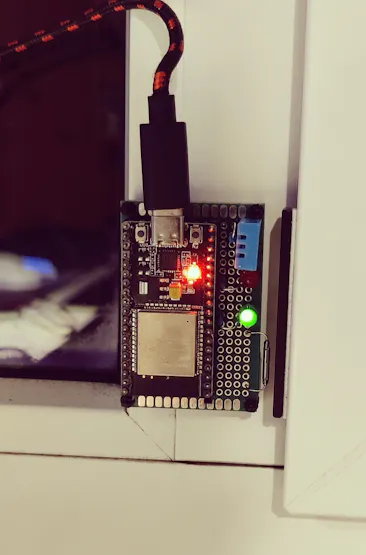 The non-invasive window sensor
 Mobile app interface
 Web dashboard
The Breezely source code is also public on GitHub, and the app can be self-hosted — ideal for anyone who cares about data privacy.
System Architecture
- Edge Devices: Battery-powered sensors installed on windows and doors
- Gateway: A local hub that collects data from sensors and transmits it to the cloud
- Cloud Backend: Processes, stores, and provides data to user applications
- User Applications: Mobile app and web dashboard for user interaction
Security Considerations
- End-to-end encryption
- Regular security updates
- Permission controls for household members
- Optional offline mode for maximum privacy
Note: No system offers perfect security — but Breezely was built with data privacy as a core principle.
Installation and Setup
Setup takes less than 30 minutes, even without technical expertise.
User Experience
The app displays:
- Current status of all monitored windows and doors
- Historical data on openings and closings
- Temperature and humidity trends
- Battery life indicators for sensors
- Customizable notifications for specific events
Project Development Journey
Breezely originated as a project at our university's IoT lab. The idea: solve a real everyday problem in shared living spaces. Over six months, we built a functional prototype.
Conclusion
Breezely shows how an everyday problem can be solved with simple operation and solid engineering — a practical building block for the smart home.
For more information, visit our GitHub repository.